
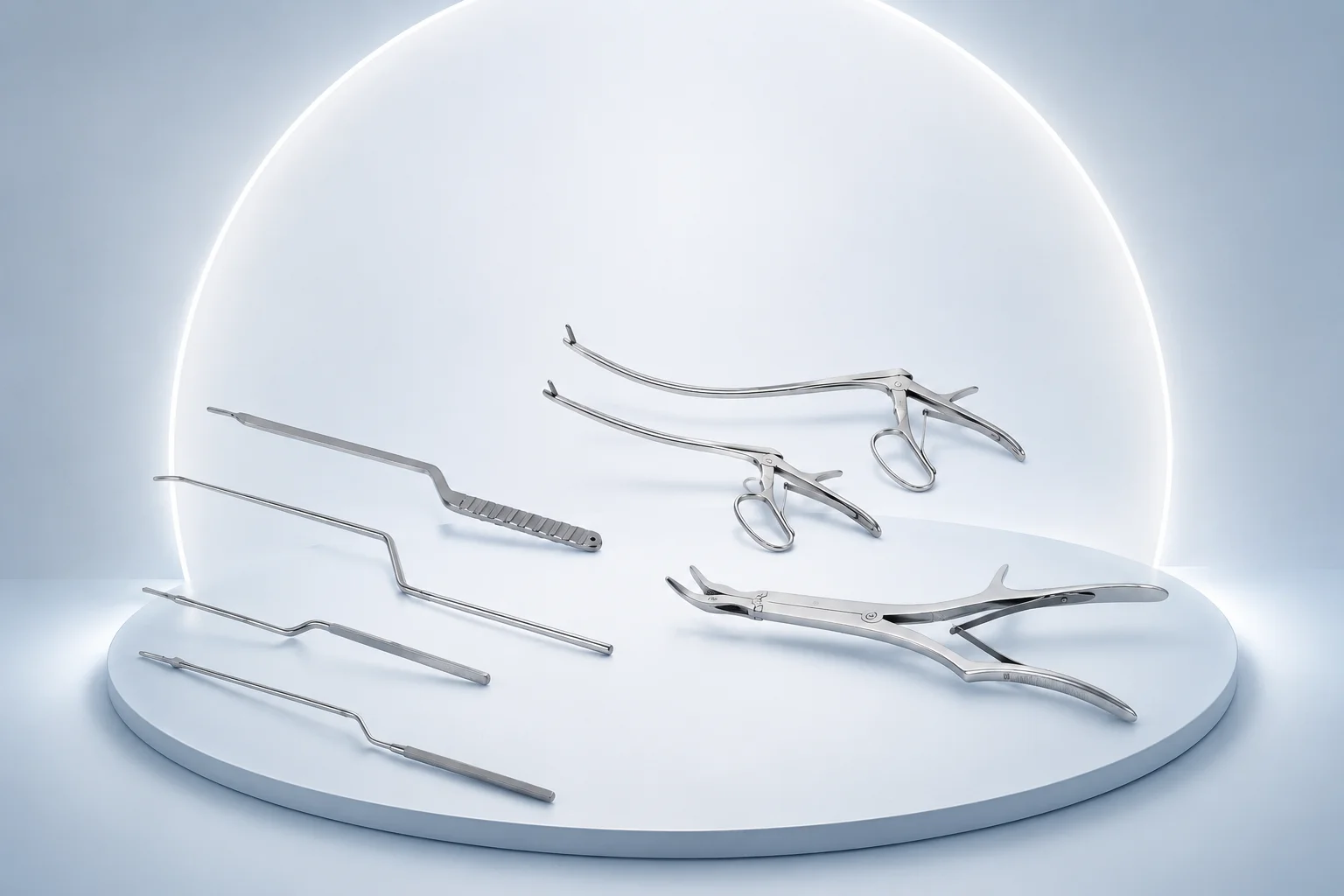
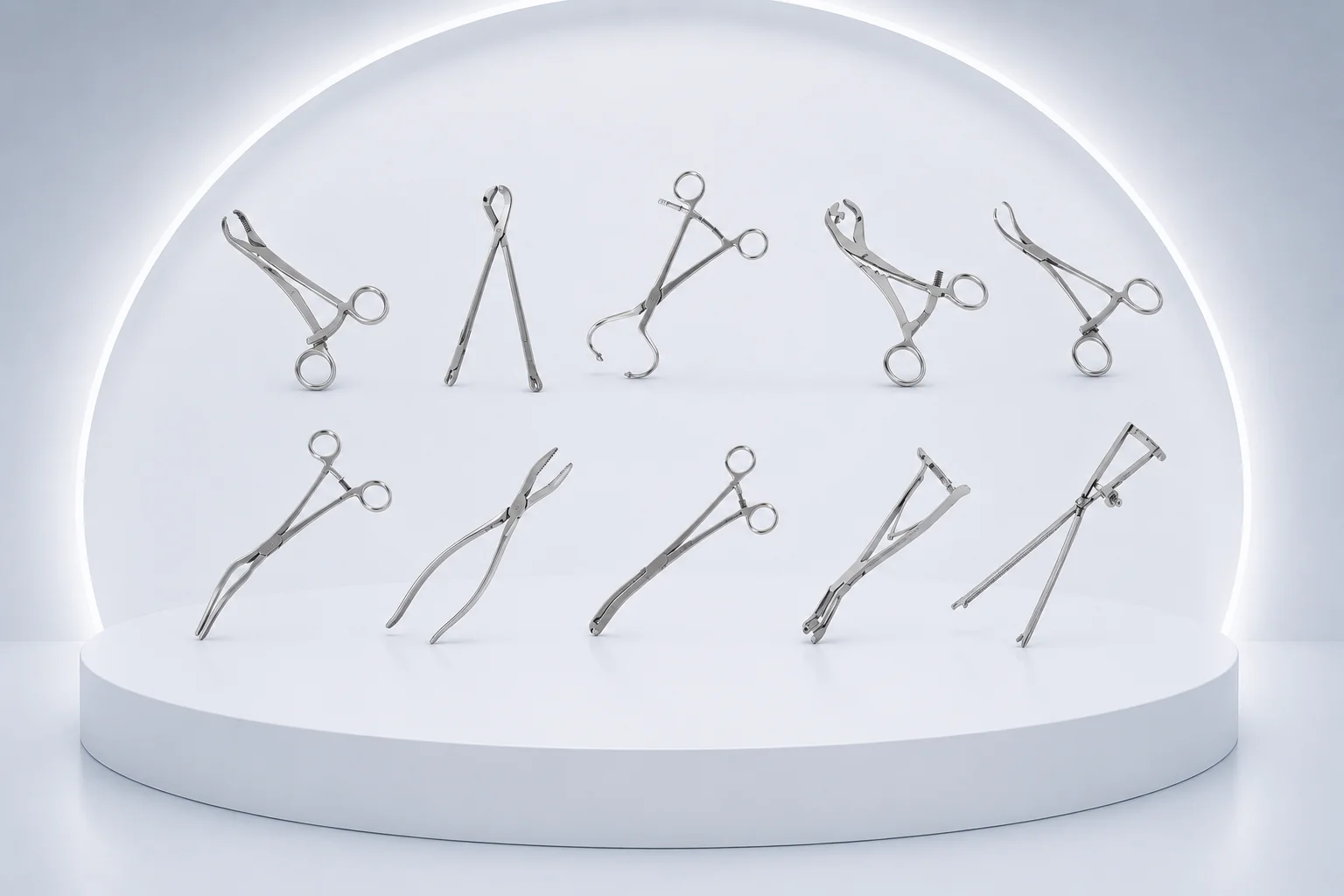
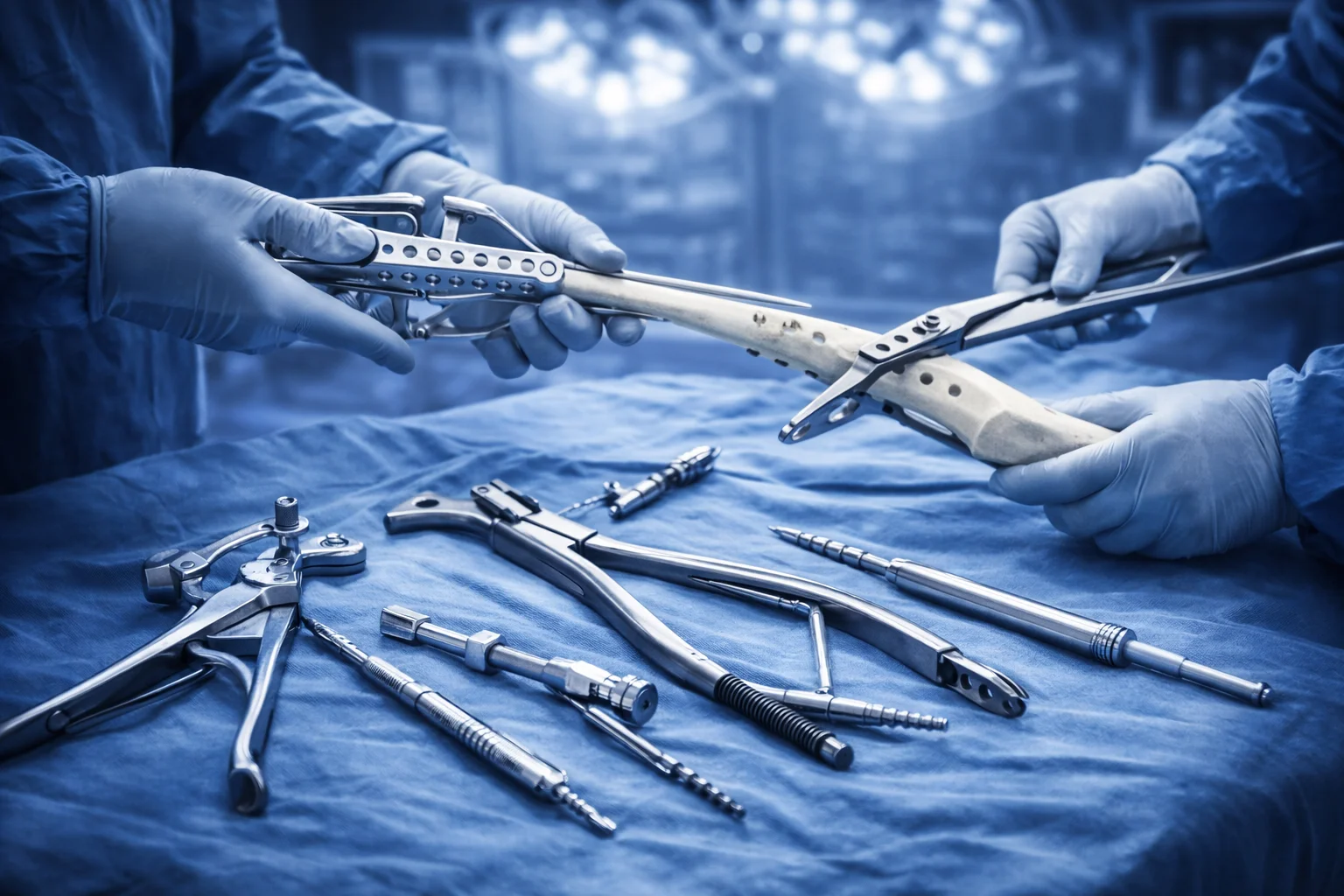
Used in the operating room to flush-cut Kirschner wires and cerclage wire after passage through bone tunnels in open reduction internal fixation. The tungsten carbide inserts deliver clean shear cuts that reduce wire burrs at the cortical surface of the tibia and femur. Orthopedic teams rely on the double-action leverage to cut 1.6–2.0 mm pins without deforming adjacent soft tissue.
Employed during trauma fixation to trim Steinmann pins and tension-band wires protruding from the olecranon or patella after fracture stabilization. The full tungsten carbide jaws maintain sharpness through repeated cuts on hardened stainless fixation wire during long ORIF cases. Surgeons use the compound hinge to generate cutting force with minimal hand fatigue when multiple pins require trimming at case conclusion.
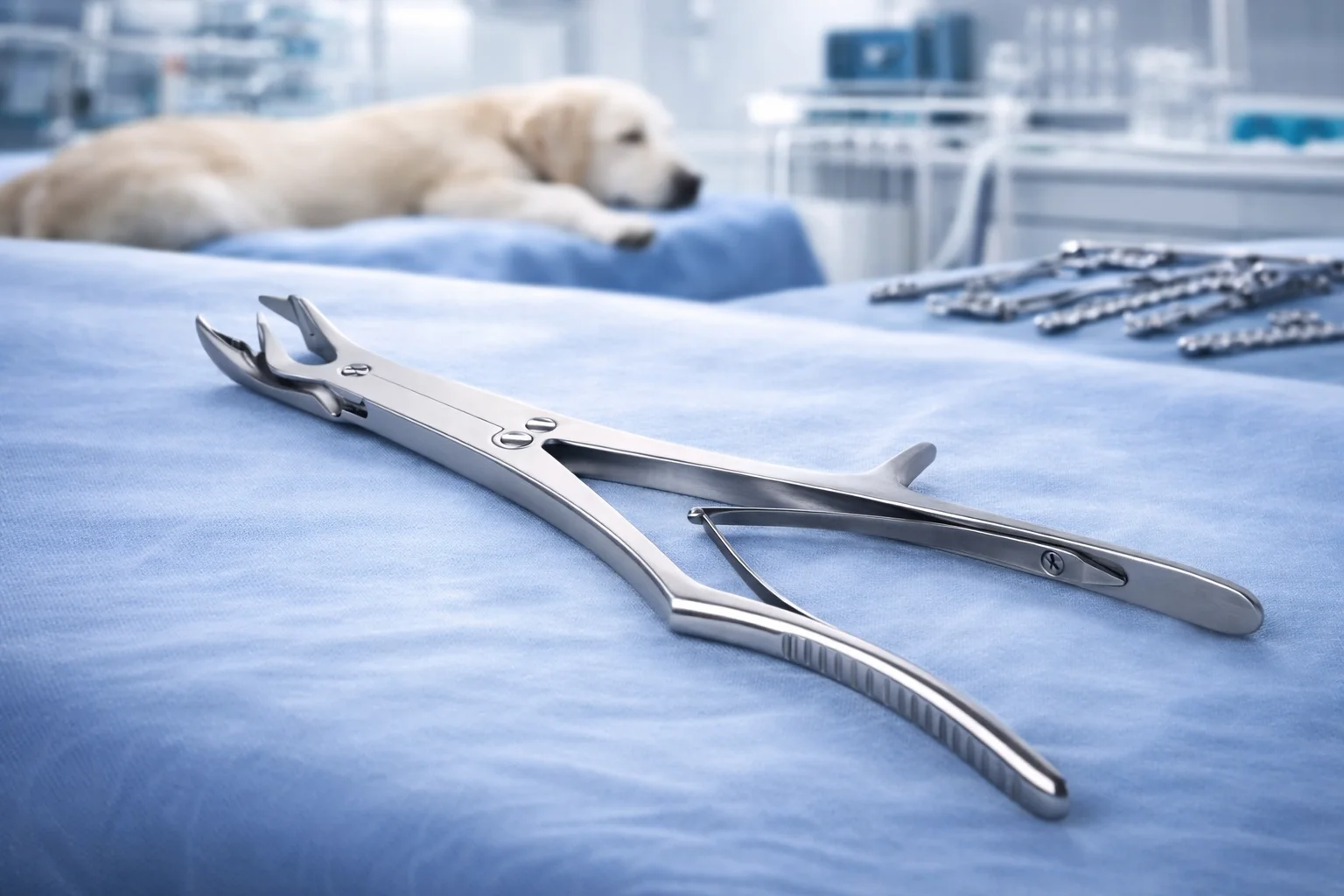
Applied to resect thickened bone edges, osteophytes, and small bone fragments during joint debridement and fracture site preparation. The heavy-duty double-action mechanism provides the mechanical advantage needed to nibble cortical bone in revision arthroplasty and nonunion takedown. Orthopedic surgeons use it to contour bone surfaces before plate application on comminuted diaphyseal fractures.
Used to contour and insert cerclage or tension-band wire through pre-drilled holes in the proximal humerus and distal radius during fracture fixation. The pliers bend wire to match the bone contour before the surgeon seats the loop and twists the free ends for compression. They are essential when constructing figure-of-eight wire patterns around the olecranon or medial malleolus.