
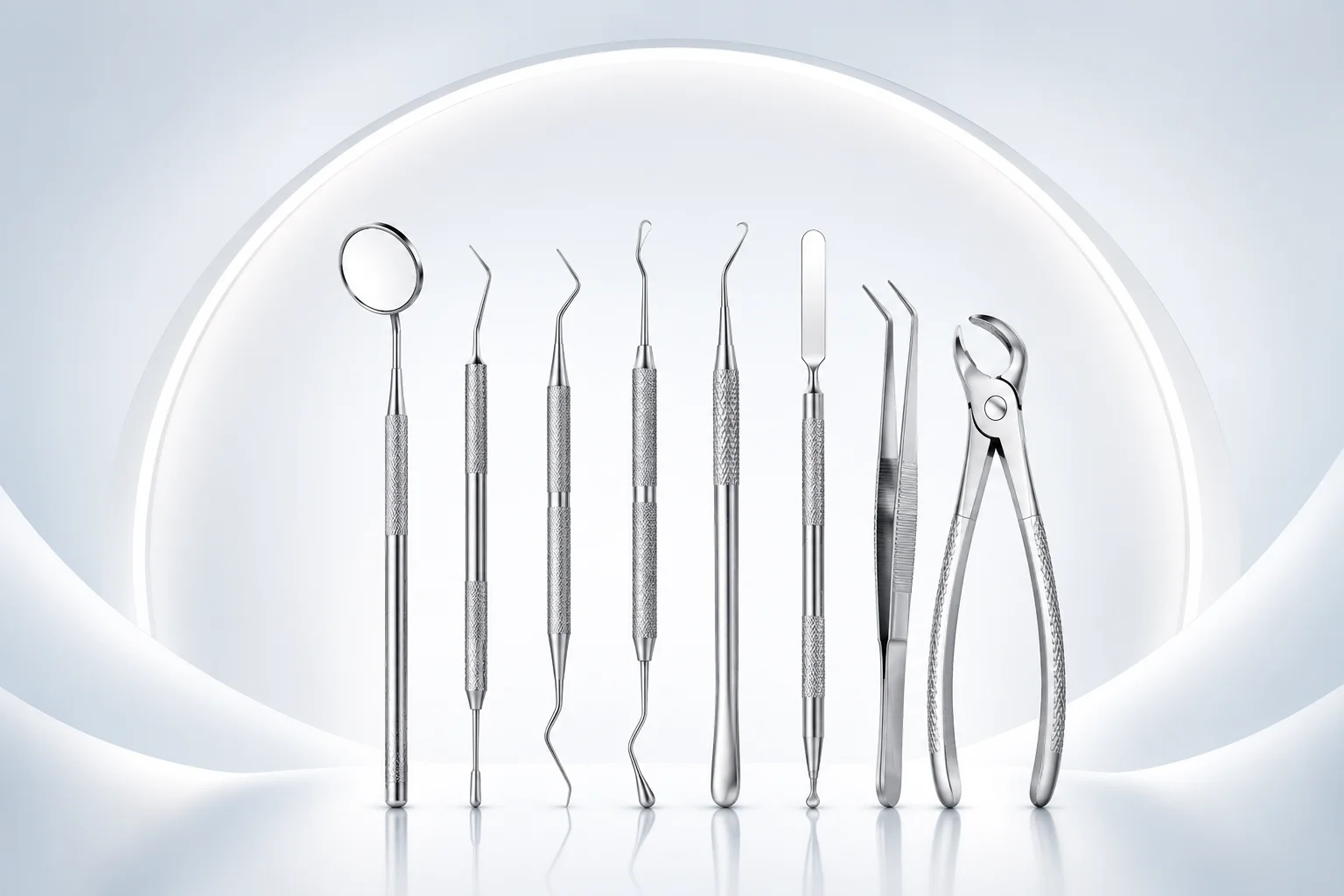
Used to smooth and condense amalgam or composite restorations after initial packing into Class I and Class II cavity preparations. The ball tip burnishes occlusal anatomy into premolar and molar restorations before final carving with a cleoid-discoid. It also polishes marginal ridges to reduce post-operative sensitivity from overhanging composite flash.
Employed to scoop softened carious dentin from the floor and walls of cavity preparations after caries-detector staining. The spoon-shaped blade removes infected dentin while preserving the peripheral seal zone in deep lesions approaching the pulp. Restorative dentists use paired excavators to refine line angles before placing bonded composite or glass ionomer bases.
Used to place and adapt light-cured composite resin into Class III and Class V preparations along the cervical third of anterior teeth. The flexible plastic blade minimizes scratching of finished enamel while contouring composite to match the emergence profile. Its non-stick surface helps pack flowable composite into narrow proximal boxes without pulling material away from the matrix.
Grasps articulating paper or silk ribbon to mark occlusal contacts after delivering crowns, onlays, and large composite restorations. The straight Miller forceps place the paper strip on the mandibular buccal cusps while the patient closes into maximum intercuspation. Clinicians adjust high spots on restorations by comparing pre- and post-adjustment ink patterns on working and balancing sides.