
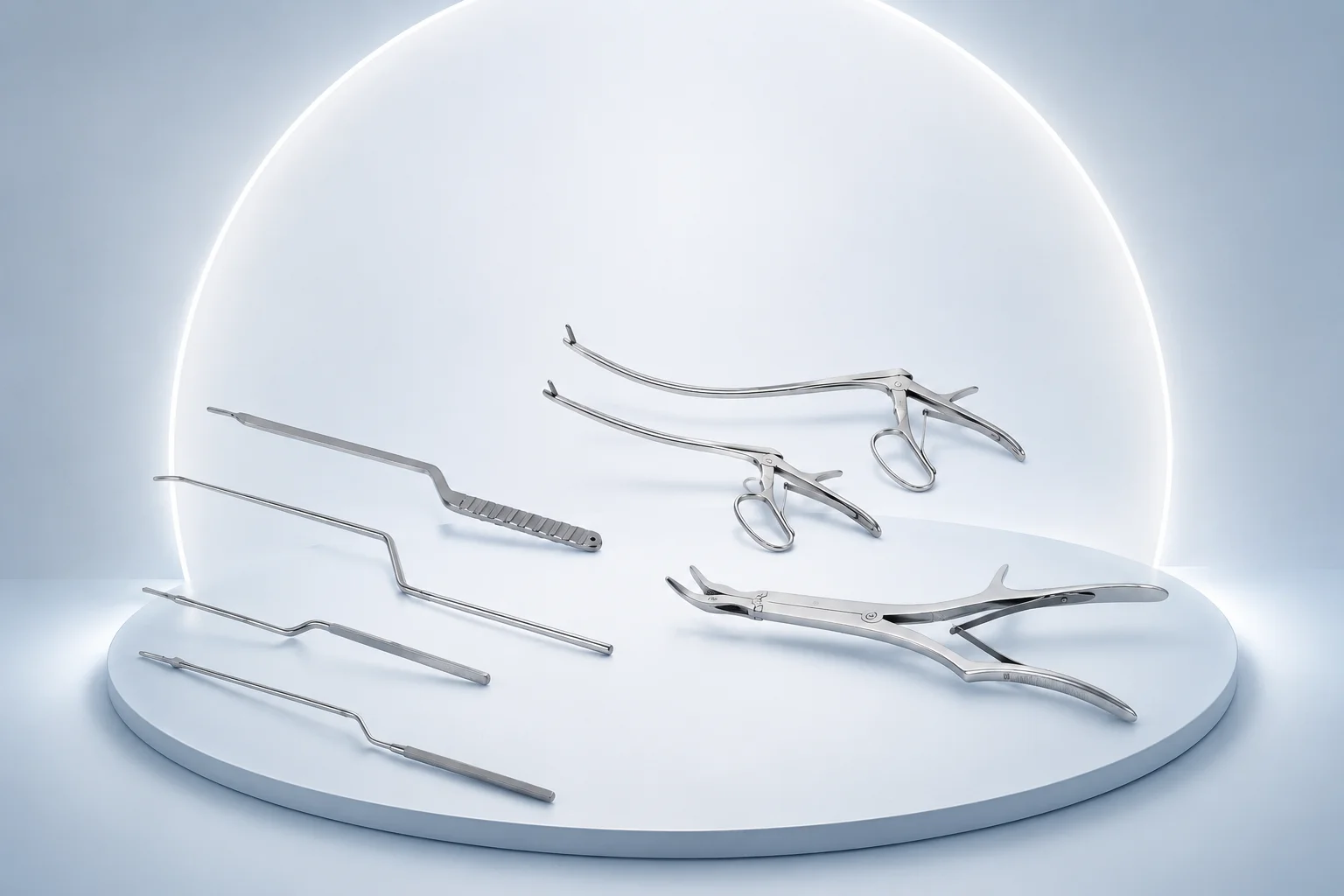
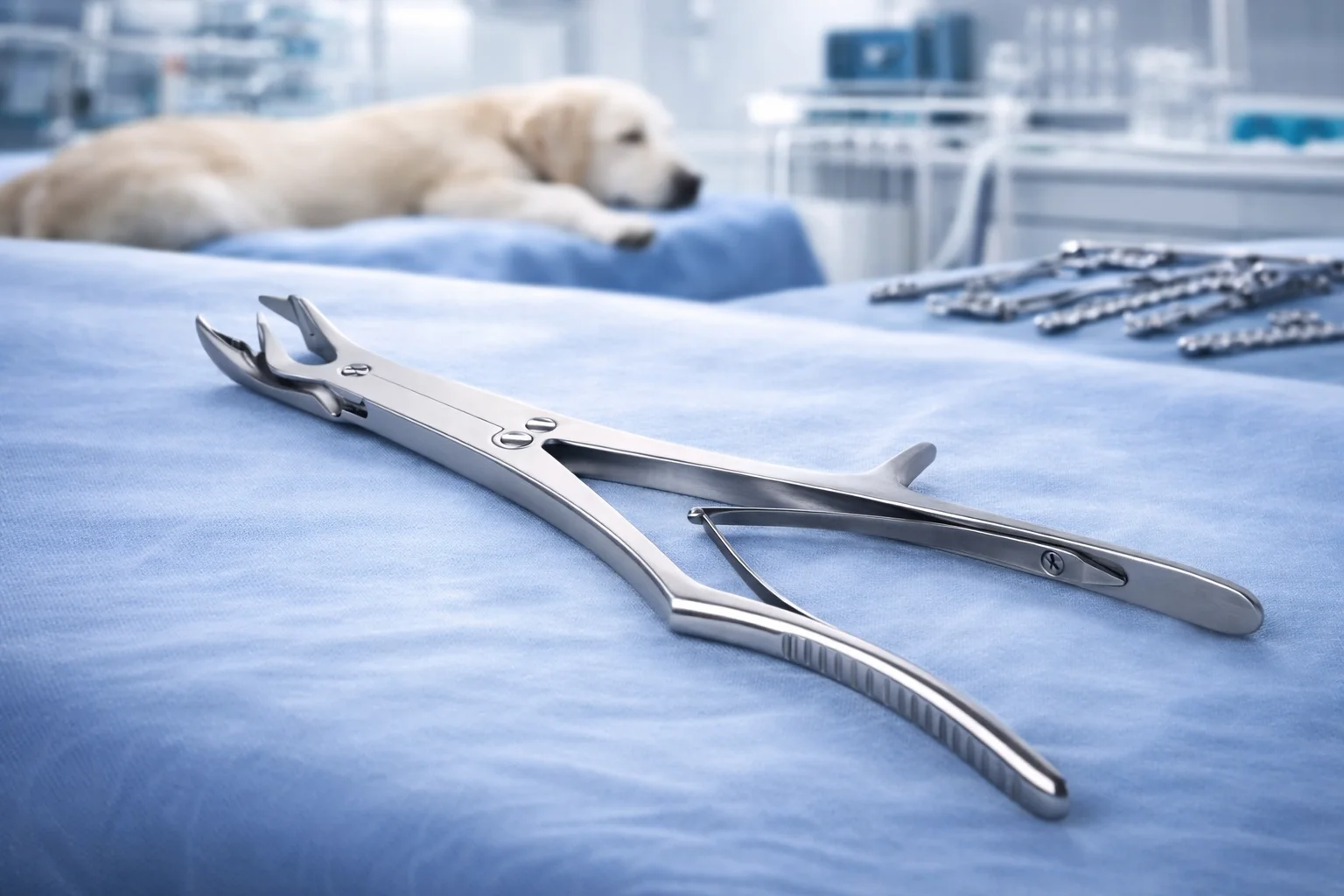
Resects posterior elements during en bloc spondylectomy and aggressive tumor debulking when thick cortical bone must be removed from the vertebral arch. The spine Stille-Leksell rongeur handles the dense bone of the pedicle and transverse process during three-column resection. Oncologic spine surgeons use it to widen the corpectomy margin while maintaining dural protection.
Used for up-biting Kerrison decompression of the caudal edge of the lamina during cervical and lumbar microdiscectomy through a midline approach. The 40-degree footplate slides beneath the ligamentum flavum while the punch removes hypertrophic bone impinging on the dural sac. Neurosurgeons select this configuration when decompressing lateral recess stenosis at the L5–S1 segment.
Applied during posterior cervical foraminotomy to remove the medial facet and uncover the exiting C6 or C7 nerve root. This Kerrison variant provides a complementary cutting angle to the primary rongeur for complete foraminal decompression. Spine fellows use it to undercut the superior articular process without violating the pars interarticularis.
Retracts paraspinal musculature and soft tissue during posterior lumbar fusion to expose the transverse processes and facet joints for decortication. The deep blade profile maintains a wide operative corridor from the spinous process to the tips of the transverse processes at L3–L5. Spine teams pair this retractor with a self-retaining frame during posterolateral fusion with pedicle screw instrumentation.
Combines soft-tissue retraction with integrated access for a punch instrument during anterior cervical discectomy and fusion at C5–C6. The retractor blade holds the longus colli and esophagus laterally while the punch port allows removal of posterior osteophytes from the vertebral body margin. Anterior spine surgeons use it to improve visualization of the disc space before interbody cage insertion.
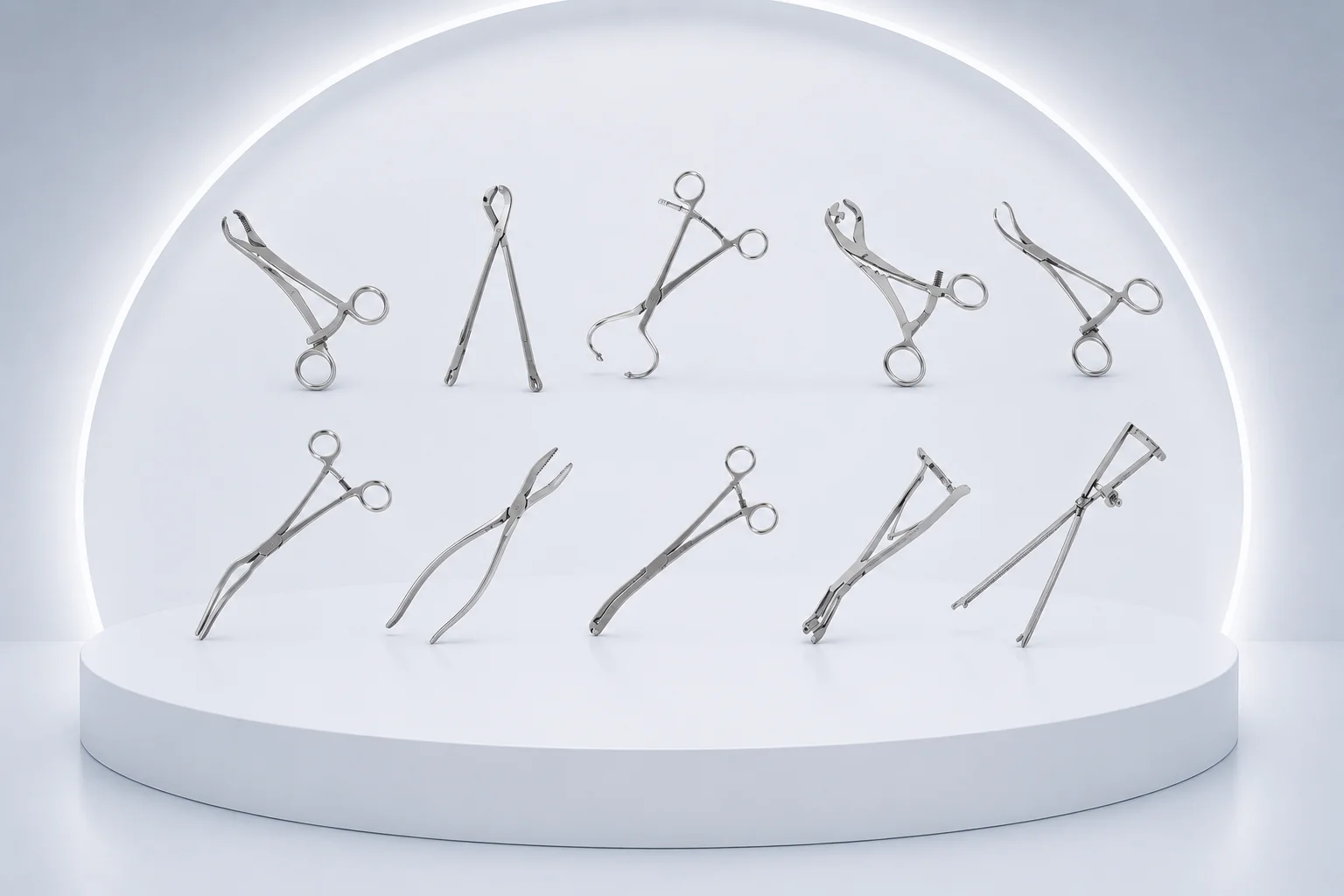
Cuts through thickened lamina and facet bone during wide decompressive laminectomy for multilevel lumbar spinal stenosis. The spine-specific double-action jaws generate sufficient force to bite through cortical bone in patients with facet hypertrophy and ligamentum flavum ossification. Deformity surgeons use it when performing posterior column osteotomies through the facet joint.
Removes disc material and endplate cartilage from the intervertebral space during transforaminal lumbar interbody fusion through a minimally invasive tubular retractor. The narrow double-action tip fits within the Kambin triangle to nibble bone along the endplate without breaching the anterior longitudinal ligament. MIS spine surgeons use it to prepare the fusion bed before expandable cage deployment.
Punches through the inferior lamina during bilateral laminotomy to access the spinal canal for central disc herniation at L4–L5. This spine-catalog punch rongeur is sized for the deeper lumbar canal compared to standard orthopedic variants. It allows the surgeon to remove bone in controlled bites while protecting the underlying dura with a cottonoid patty.