
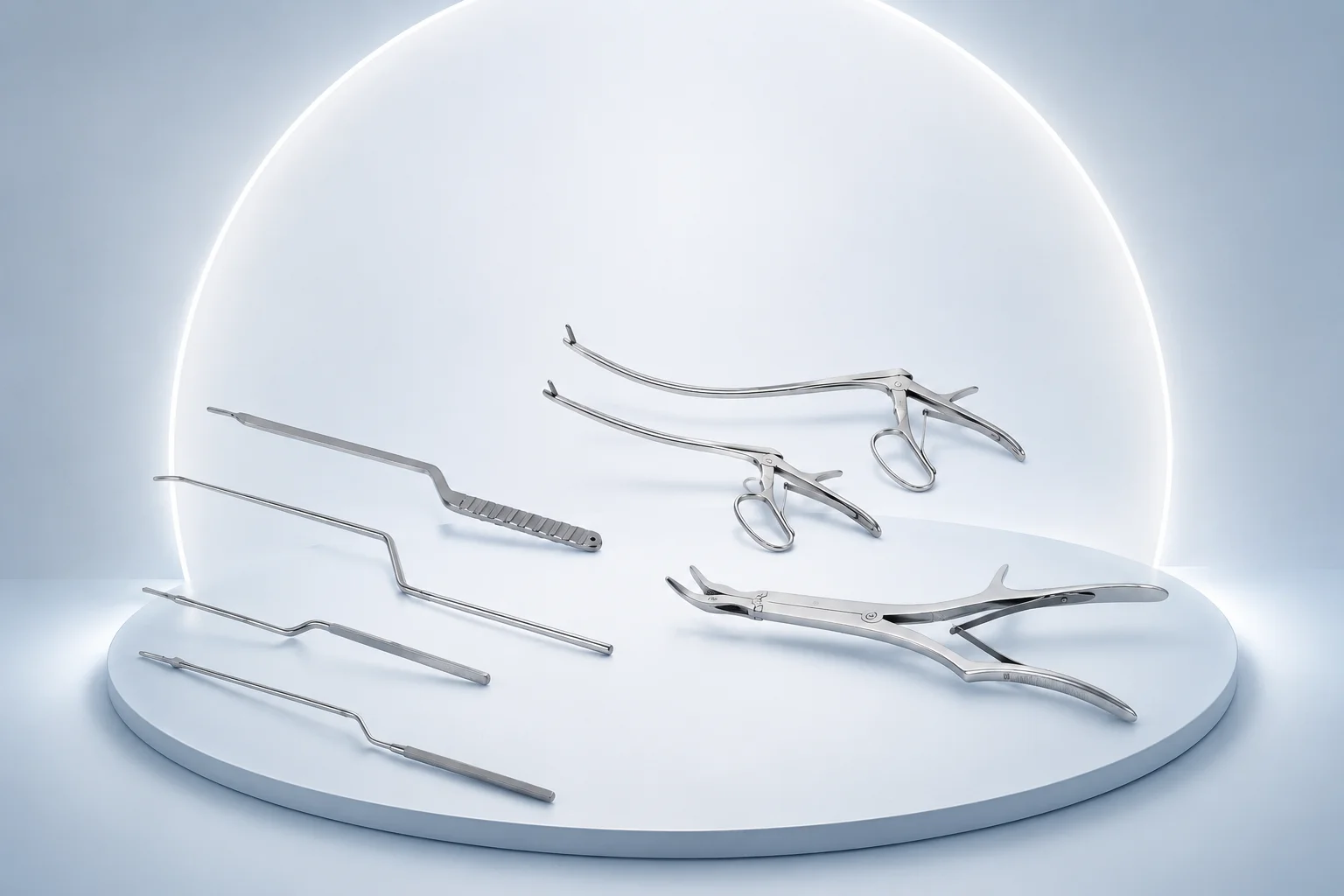
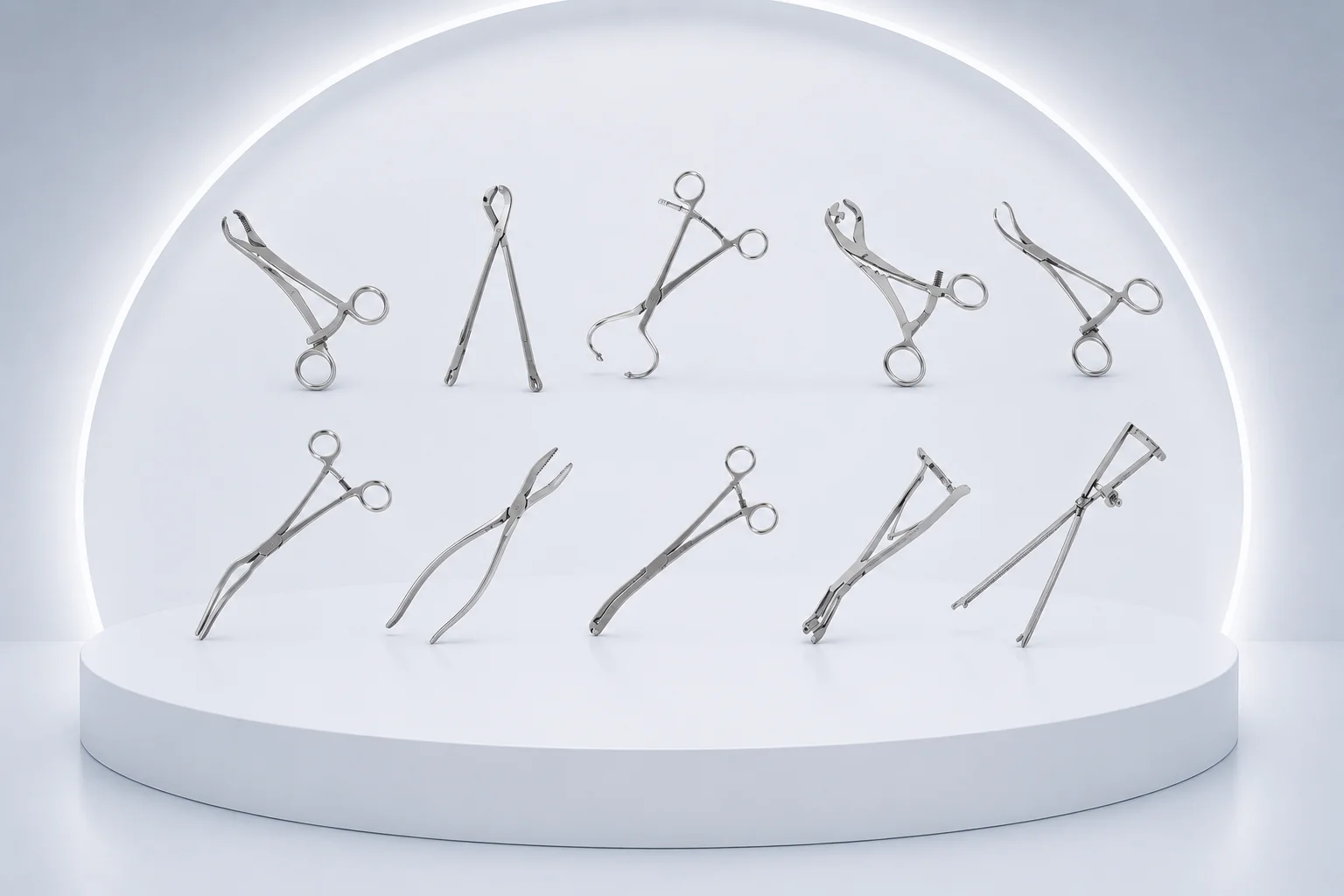
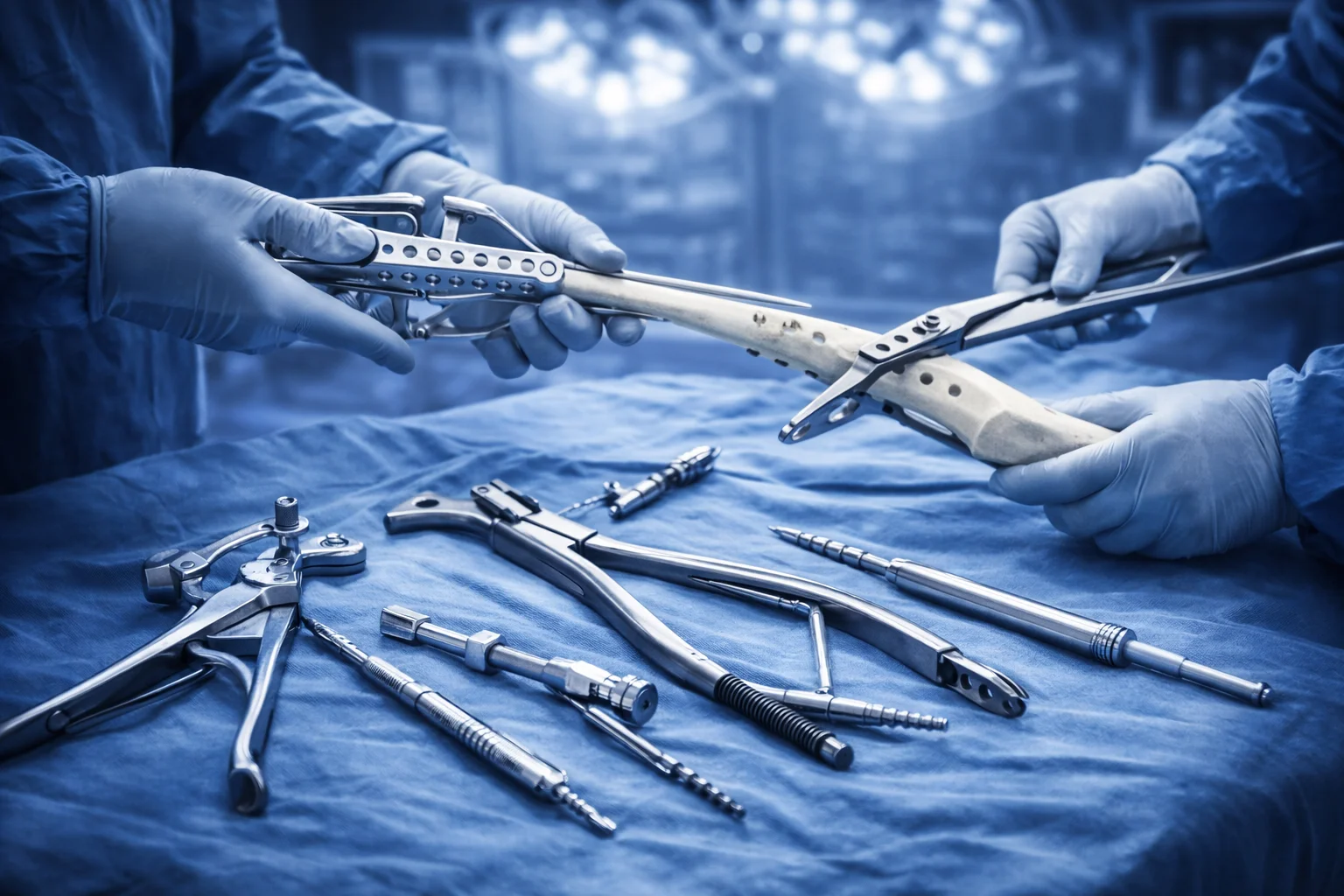
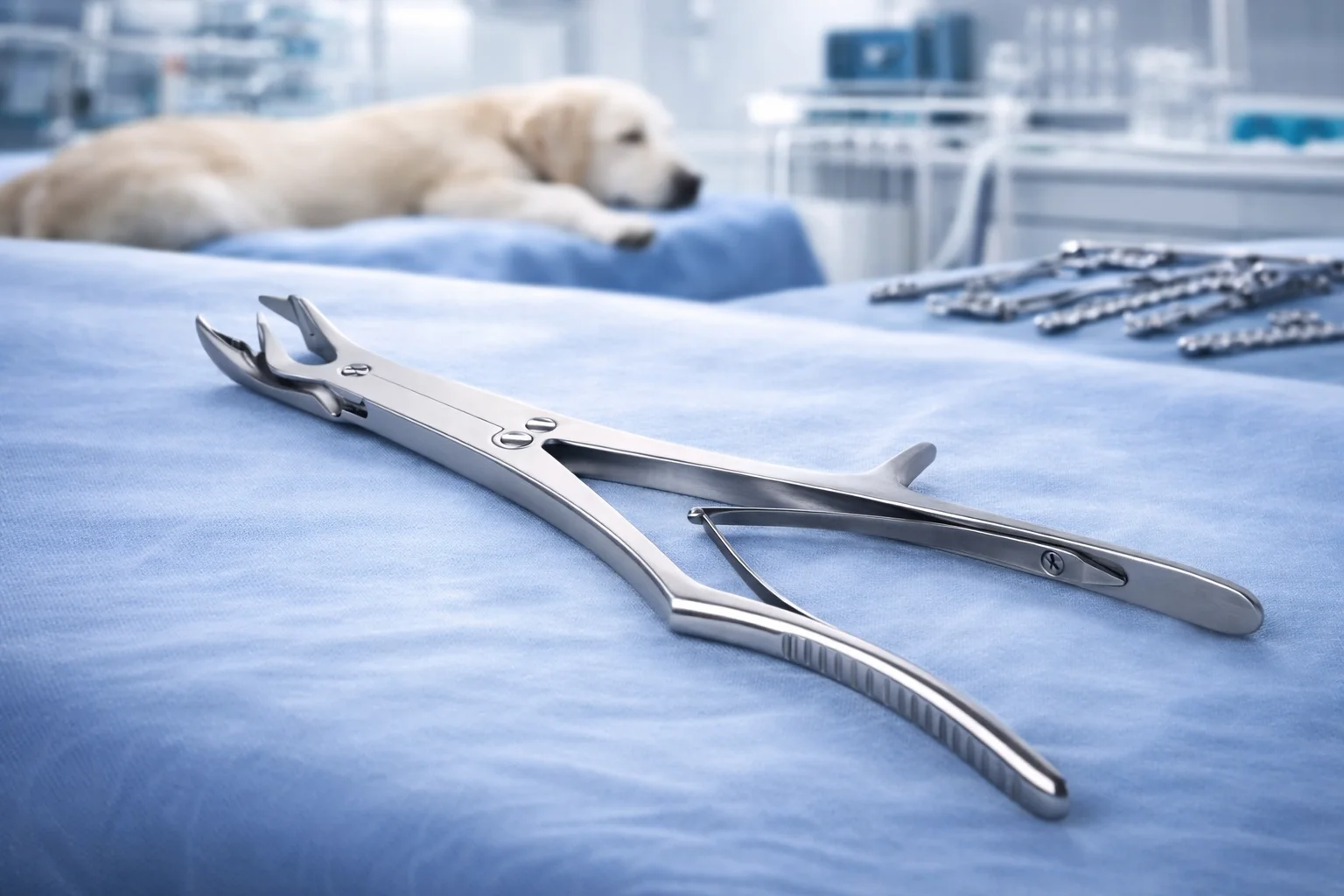
Compresses comminuted tibial plateau and pilon fracture fragments during ORIF when the trauma reduction instrument module is opened for articular surface reconstruction. The serrated jaws grip wet metaphyseal bone while the speed-lock bar maintains reduction during provisional K-wire fixation. Articular trauma surgeons use this forceps when elevating the depressed central plateau fragment before raft screw placement.
Identified quickly on the trauma reduction tray by its gold handles during emergent ORIF of hip and femoral neck fractures in elderly patients. The speed-lock holds valgus reduction of the femoral neck while cannulated screws are inserted over a guidewire on the fracture table. Trauma attendings specify gold-handle forceps in teaching hospitals to distinguish reduction tools from clamping forceps mid-case.
Manipulates multiple fracture fragments simultaneously during reconstruction of comminuted distal femur and proximal tibia fractures in high-energy polytrauma. The trauma reduction module deploys multi-jointed forceps when a single clamp cannot hold the articular block, metaphyseal wedge, and diaphyseal segment in alignment. Surgeons sequentially release and re-grip fragments as the locking plate is applied.
Shapes tension-band and cerclage wire on the trauma reduction tray during patellar, olecranon, and malleolar fracture fixation in the acute setting. The trauma-specific wire benders are kept with reduction instruments so wire contouring does not delay fracture reduction. Residents use them to prepare wire loops before the attending applies definitive tension across the fracture site.